
SYSTEMATIC FUTURES EXECUTION
Learn the Market. Plan the Trade. Execute with Structure.
Plain-English NQ and MNQ futures education, proprietary WolfPack TradingView market-context tools, and live member training—organized into a repeatable learning, execution, and review process.

MARKET STRUCTURE PREREQUISITES
Build the Foundation
Before the Setup
Build these three foundations before risking capital: understand the contract, read current market context, and define execution and risk before entry.
PILLAR 01
Futures Foundations
Before interpreting any chart signal, you must understand contract mechanics, leverage math, and precision tick valuations across equity index futures.
- Contract specifications (NQ, ES, YM, RTY)
- Tick increments & precise point-dollar values
- Overnight margin vs. intraday leverage requirements
PILLAR 02
Market Context
A cue is more useful when it agrees with higher-timeframe direction, nearby levels, and current session volatility. When those factors conflict, slow down or stand aside.
- High-timeframe trend vs. mean-reversion regimes
- Dynamic structural support & resistance zones
- ATR volatility profiling & opening range extensions
PILLAR 03
Execution & Risk
Sound execution starts with a defined entry condition, invalidation point, position size, and exit plan. The goal is consistent decision-making—not eliminating emotion or guaranteeing an outcome.
- Order types: MIT, stop-market, and limit fills
- Slippage mitigation & fast-market routing protocols
- Hard invalidation stops & systematic R-multiple targets
Use the foundation modules before joining live sessions so the terminology, risk framework, and review process are familiar.
What does each WolfPack tool contribute to a trading decision?
Different evidence. One structured decision.
No WolfPack indicator is a standalone entry instruction. Each tool supplies a different kind of evidence—trend, momentum, volume expansion, location, volatility, or market condition—inside a written plan with defined risk.
WP Signals
Price-overlay context, trend state, reversal dots, and close-confirmed cues. A marker is evidence to evaluate, never an automatic entry.
WP Fusion
Distinguishes initial directional signals from pullback-continuation signals and helps confirm whether the surrounding market condition supports the idea.
WP Oscillator
Shows momentum direction, crossover separation, reset behavior, and the gray neutral area. Momentum confirmation still requires location, trade space, and defined risk.
WP BlowOff
Highlights unusual volume expansion and follow-through context. A blowoff candle does not guarantee a top, bottom, reversal, or continuation.
50 EMA
An exponential moving average weights recent prices more heavily. WolfPack uses its slope, price location, pullbacks, and flatness as trend or chop context. It is lagging, not an entry signal.
ATR
Average True Range describes recent movement and volatility. Use it to judge whether current movement and risk distance fit the environment; ATR does not predict direction.
WP Levels & Consolidation
WP Support & Resistance maps reaction levels, pivots, clearance, and available trade space. WP Consolidation Zone identifies compression where false breaks and chop make patience important.
Beacon & Master Dashboard
WolfPack Beacon adds current-chart and higher-timeframe momentum confirmation. WP Master Dashboard organizes tool states and timing without replacing a written trade plan.
Learn how the WolfPack tools work together on TradingView, then apply them through chart review, simulation, journaling, and the Live NQ Education Room.
METHODICAL CURRICULUM
The WolfPack
Learning Path
The WolfPack Learning Path moves from contract mechanics to market context, risk planning, journaling, and personal playbook development. Each stage adds vocabulary and decision skills used in the next.
Practice in simulation before using live capital
Log context, risk, execution, and review notes consistently
Change a rule only after reviewing enough examples
PHASE 01 // FOUNDATIONS
Contract Specifications & Order Mechanics
Learn point values, tick sizes, margin and leverage, basic order behavior, and the practical differences between simulation and live execution.
PHASE 02 // CONTEXT
Market Context & Volatility Regimes
Practice separating trend from range, locating price relative to important areas, and recognizing when volatility or poor trade space calls for patience.
PHASE 03 // TESTING & JOURNALING
Data Quality & Execution Journaling
Record context, setup, entry reasoning, planned risk, execution notes, and what changed after entry. Review a meaningful sample before changing a rule.
PHASE 04 // PERFORMANCE REVIEW
Performance Audit & Playbook Finalization
Review results by setup and market condition. Keep rules that are clear and repeatable, revise ambiguous rules, and document every change before testing again.
LIVE NQ & MNQ EDUCATION
Live NQ Education Room
Observe NQ and MNQ price behavior, key levels, momentum changes, and the WolfPack framework as the New York session develops.
Regulatory & Educational Notice: The WP Signal Systems Live Room provides real-time market structure walkthroughs, technical mechanics analysis, and educational commentary only. It does not constitute individualized financial, investment, or trading advice. Futures trading involves substantial risk of loss and is not suitable for every investor.
PRACTICAL CHART REVIEW
Trade Review
Case Studies
Use each session as a chart-reading case study. Reviews connect market context, level interaction, confirmation, invalidation, and the decisions made.
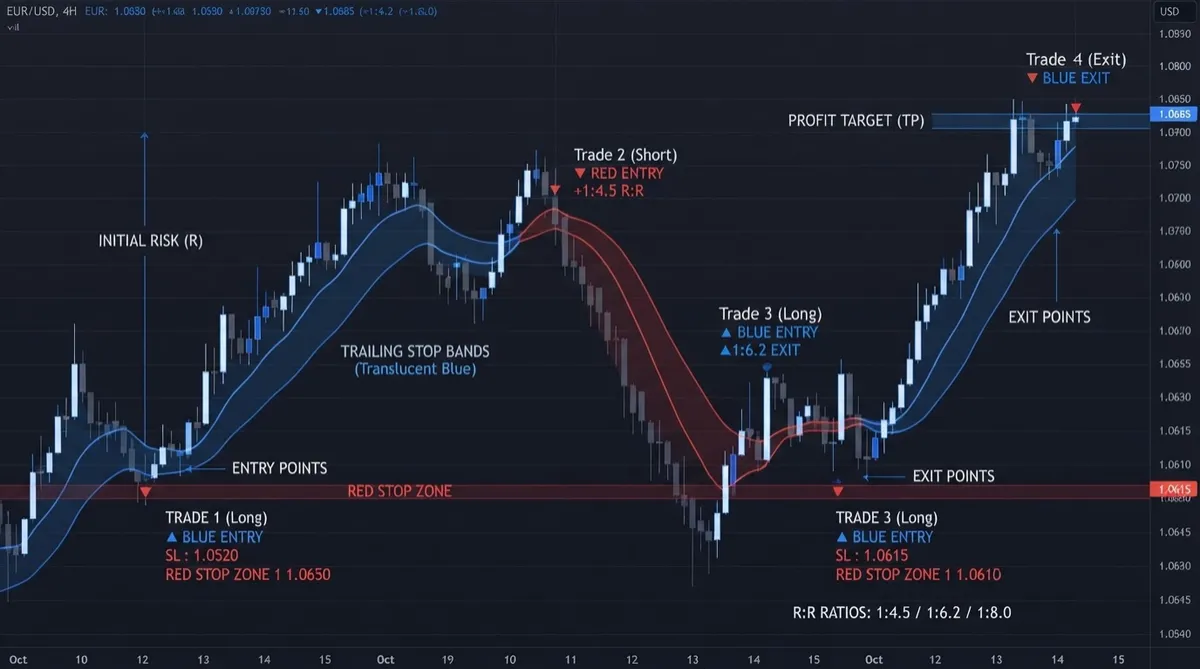
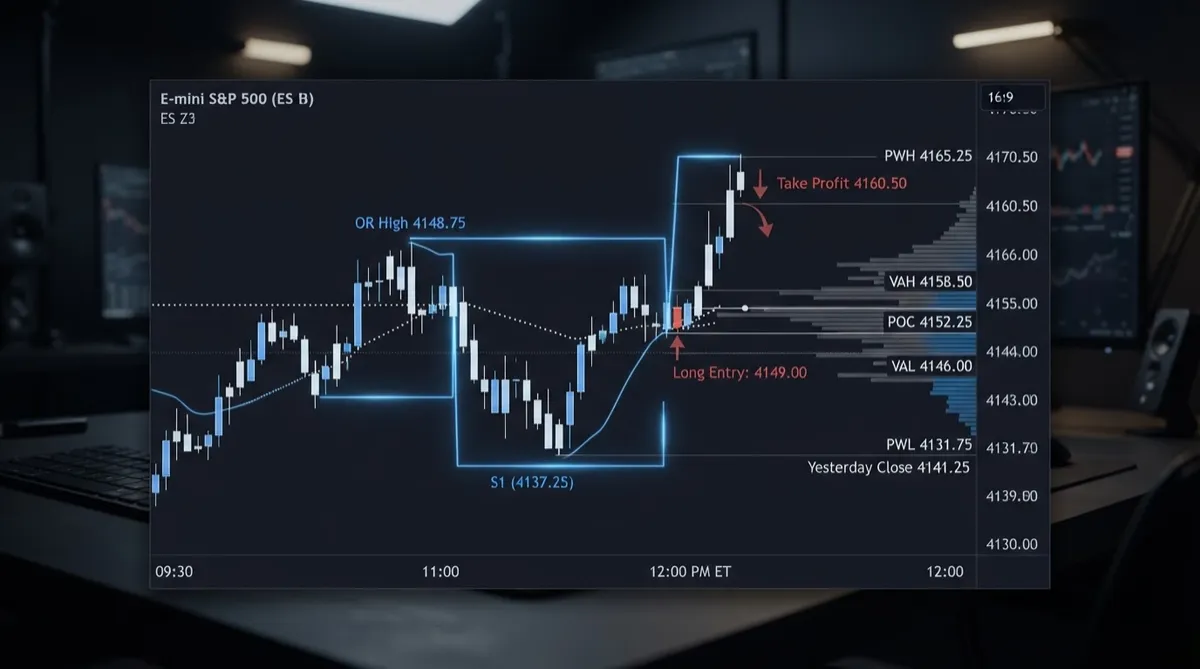
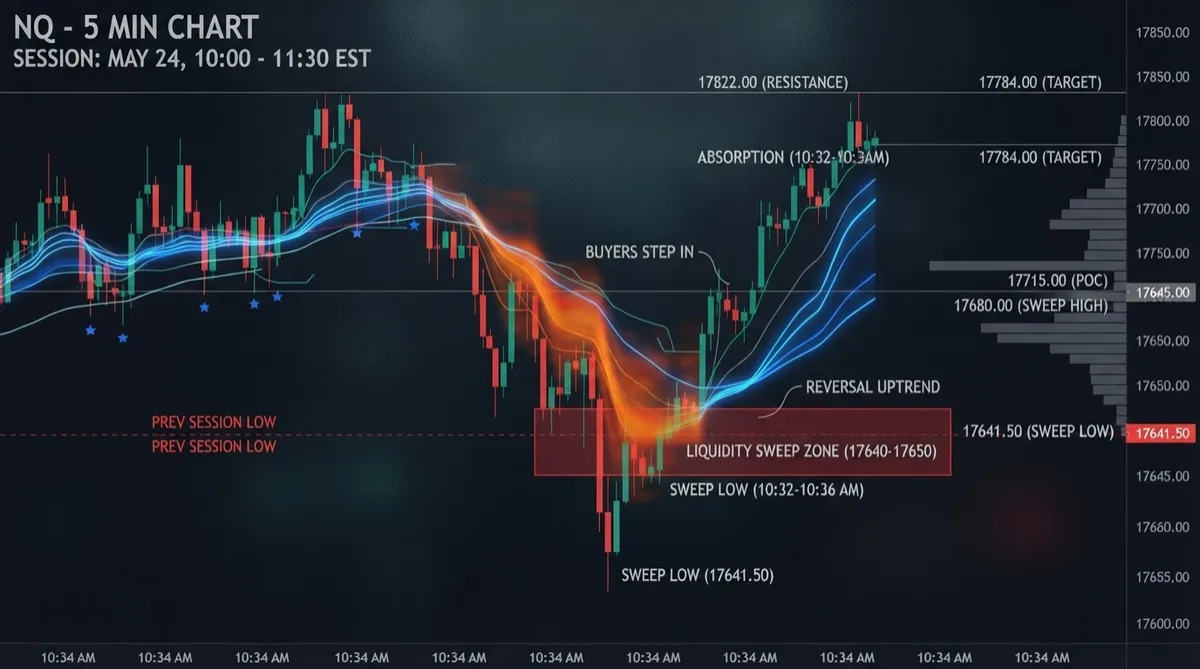
Use WolfPack YouTube recaps as case studies after learning the core concepts. Availability and publishing cadence may vary.
TRANSPARENCY FIRST
Clear Answers on
Risk & Software
We operate with total candor. We do not sell get-rich illusions, hype alerts, or guaranteed returns. Review the exact operational parameters and software requirements below before taking action.
Is this a signal service?
No. WP Signal Systems provides education and decision-support tools. Members remain responsible for every trade, every order, and every risk decision.
What platforms does WolfPack use?
WolfPack uses TradingView for charting and proprietary indicator education. Many members use NinjaTrader 8 for order execution, but the education focuses on market context, confirmation, risk, and review—not automation.
Is prior futures trading experience required?
No prior experience is necessary, but a serious commitment to strict risk discipline is mandatory. We guide beginners through market mechanics, contract specifications, and thorough simulator execution before risking live capital.
Do indicators remove trading risk?
No. No indicator or curriculum can eliminate market uncertainty or prevent losses. Futures trading carries substantial risk. WolfPack tools organize context and risk decisions; traders remain responsible for every order.
CFTC RULE 4.41 & STATUTORY RISK WARNING
Futures, options, and currency trading contain substantial risk of loss and are not appropriate for every individual. An investor could lose all or more than the initial capital invested. Only genuine risk capital should be deployed for trading. Past performance, whether real or simulated, is not indicative of future results. Hypothetical or simulated performance results possess inherent limitations: unlike an authentic performance record, simulated trading does not represent actual execution, may not factor liquidity constraints, and no representation is made that any account will or is likely to achieve profits similar to those illustrated.

WP Signal Systems provides futures education, proprietary WolfPack market-context tools, and a structured framework for chart reading, risk planning, and review.
Core Navigation
Education • WolfPack Indicators • Live NQ Room • YouTube Training
Direct Inquiries
Have questions about the curriculum, live room, or charting tools? Book a call to discuss which education path fits your current experience.


© 2026 WP Signal Systems. All rights reserved. Educational content and market-context tools; no individualized investment advice or broker-dealer services.